Behind the scenes: how things work a modern Metal Foundry
Wiki Article
The Crucial Features of a Steel Shop: Services and Innovations Discussed
Steel foundries function as essential components in the production field, focusing on the conversion of raw materials into exact steel items. They make use of diverse spreading methods, using essential services such as machining and prototyping. Innovations in technology and sustainability additionally boost their capacities - Aluminum Casting. Comprehending these advancements and functions discloses the significant function of factories in shaping modern manufacturing. What particular advancements are driving these adjustments, and just how do they impact total manufacturing effectiveness?Review of Metal Shop Processes
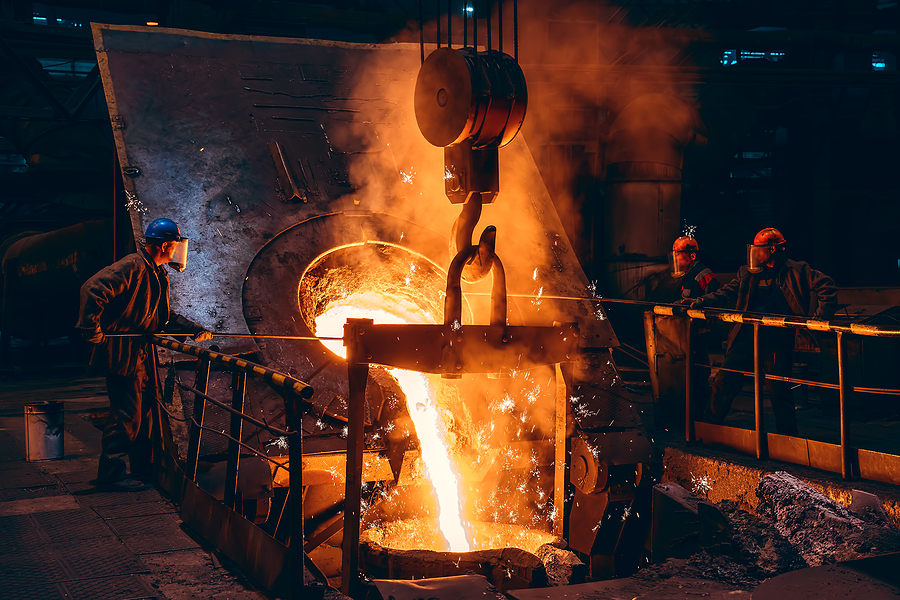
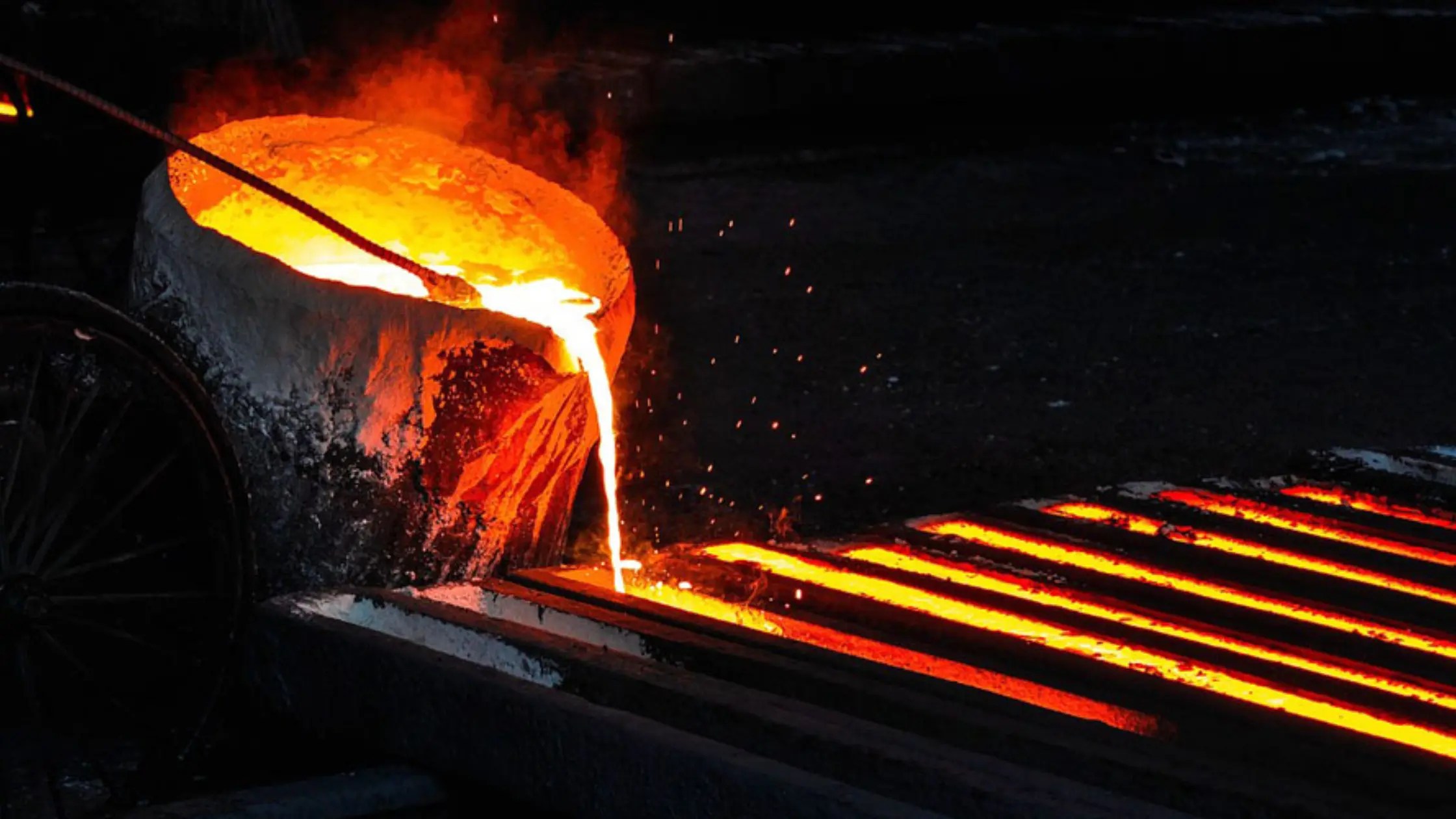
The following phase includes melting, where the alloys are warmed in heaters up until they reach a fluid state. This liquified metal is after that thoroughly poured into mold and mildews designed to form the end product. After cooling, the strengthened metal is gotten rid of from the molds, followed by a series of finishing operations such as grinding, polishing, or machining to accomplish exact dimensions and surface top qualities.
Throughout these processes, quality control is necessary to assure that the generated elements meet market criteria and requirements, eventually causing reliable and resilient steel items.
Casting Techniques and Their Applications
Various casting strategies are employed in steel foundries to develop elements with details forms and properties. Amongst one of the most usual methods are sand spreading, investment spreading, and die spreading. Sand spreading utilizes sand molds, making it flexible and cost-effective for large parts. Investment casting, recognized for its accuracy, includes creating a wax pattern coated in a ceramic covering, suitable for detailed shapes and smaller sized parts. Pass away spreading, which utilizes high-pressure to compel molten metal into mold and mildews, is efficient for mass production of complicated geometries.These techniques serve different applications throughout sectors, consisting of auto, aerospace, and equipment. Each approach provides unique benefits depending upon the desired material properties, expense factors to consider, and production quantity. Steel shops select the most proper casting method based on task needs, ensuring the last products meet rigid high quality and performance criteria - Aluminum Foundry. This diversity in casting methods emphasizes the ingenious capabilities of modern-day metal factories
Machining Providers in Steel Foundries
While casting strategies lay the structure for part production, machining services in metal foundries play a vital function in refining and ending up these components. Machining encompasses different procedures such as milling, turning, exploration, and grinding, guaranteeing that cast elements satisfy exact specs and resistances. This step is important for enhancing the mechanical properties and surface coating of the end product.Shops use advanced CNC (Computer system Numerical Control) devices to achieve high levels of accuracy and repeatability. These technologies permit complicated geometries and intricate designs to be recognized effectively. Furthermore, machining services can be customized to accommodate various materials, including ferrous and non-ferrous metals, thus expanding the factory's capabilities.
Inevitably, machining services not only add to the overall quality and performance of actors components however also play a critical role in lowering preparations and improving performance in the manufacturing procedure.
Prototyping and Its Value in Production
Prototyping plays an essential function in production by enabling for the evaluation of style principles before major production. Various techniques, such as 3D printing and CNC machining, make it possible for makers to develop exact representations of end products. This practice considerably improves manufacturing effectiveness by recognizing potential problems early while doing so.Benefits of Prototyping
In the domain of manufacturing, the advantages of prototyping prolong far beyond simple aesthetic depiction, functioning as an important action in the product advancement process. Prototyping allows designers and designers to check principles, identify style defects, and evaluate functionality before mass production. This repetitive technique decreases the risk of expensive mistakes and helps improve styles based upon real-world comments. In addition, prototypes promote far better communication among stakeholders, guaranteeing that everyone has a clear understanding of the intended end product. By speeding up the development timeline, prototyping also makes it possible for makers to react quickly to market needs, eventually boosting competition. To summarize, the advantages of prototyping are essential for accomplishing reliable, reliable, and cutting-edge manufacturing outcomes.Strategies Used in Prototyping
The effectiveness of prototyping counts heavily on the techniques utilized throughout the process. Different methods such as additive production, CNC machining, and sand casting are frequently made use of to produce models in metal factories. Additive production, or 3D printing, enables for the fast production of complicated geometries, promoting style iterations. CNC machining offers precise control over dimensions, guaranteeing that models satisfy exact specs. Sand casting, on the various other hand, is valuable for developing larger prototypes with elaborate styles, using mold and mildews to shape molten metal. Each technique carries distinct benefits, enabling factories to choose one of the most appropriate method based upon job demands. Eventually, the choice of prototyping method plays a crucial role in refining designs and advancing product growth.Influence On Production Performance
Usually forgotten, efficient prototyping substantially increases production effectiveness in producing processes. By permitting makers to check and fine-tune designs before major production, prototyping lessens mistakes and decreases costly rework. This iterative technique enables the identification of potential layout imperfections early, making sure that the end product meets specs and efficiency criteria. Prototyping assists in much better interaction among team members, as physical designs or simulations supply tangible referrals for conversation and feedback. Consequently, production timelines reduce, and resource allotment becomes a lot more reliable. In a competitive market, the ability to introduce promptly while preserving high quality is essential, making prototyping an important component in the manufacturing landscape, specifically within metal shops where precision is extremely important.Technologies in Steel Factory Technologies
Advancements in metal factory innovations have actually considerably transformed the sector, specifically with innovative spreading techniques and the combination of automation and robotics. These advancements enhance performance, precision, and the general top quality of metal products. As the need for much more complex layouts and faster manufacturing times increases, these modern technologies are becoming crucial for competitive foundries.Advanced Spreading Techniques
As steel shops proceed to advance, advanced spreading methods arise as crucial technologies that boost manufacturing efficiency and material homes. Strategies such as financial investment casting, lost foam spreading, and 3D printing are reinventing the market by permitting for even more intricate styles and decreasing material waste. Financial investment spreading, understood for its precision, enables producers to create complex geometries with marginal machining needed. Metal Foundry. Lost foam spreading supplies similar advantages, utilizing a foam pattern that evaporates throughout the pouring procedure, resulting in exceptional surface area finishes. In addition, 3D printing is changing prototyping and tiny batch production, making it possible for fast style models and personalization. Collectively, these sophisticated approaches not just streamline production but additionally boost the overall high quality and efficiency of actors steel productsAutomation and Robotics
Automation and robotics have actually become important components of modern steel foundry procedures, driving significant innovations in effectiveness and precision. Automated systems simplify different procedures, from material taking care of to casting and completing, reducing the dependence on manual labor. This shift enables for boosted manufacturing rates and consistent high quality, as robotics do repetitive jobs with high precision. Additionally, automation improves safety by reducing human exposure to hazardous atmospheres. Advancements such as Expert system and artificial intelligence are being integrated right into these systems, making it possible for predictive maintenance and optimizing operations. As shops adopt these technologies, they not just enhance operational performance yet additionally minimize waste and power usage, positioning themselves competitively in a quickly progressing market.Lasting Practices in Metal Foundries
While the steel factory market has typically been connected with high energy usage and ecological influence, several centers are now embracing sustainable techniques to minimize these effects. One significant approach includes the recycling of scrap steel, which minimizes waste and conserves raw materials. By implementing closed-loop systems, foundries can decrease water use and improve energy efficiency via heat recuperation innovations.The fostering of cleaner innovations, such as electric furnaces, has actually come to be much more prevalent, minimizing greenhouse gas discharges. Foundries are additionally discovering different power resources, consisting of solar and wind power, to reduce dependence on fossil gas.
Additionally, workforce training programs focused on sustainability methods aid grow a culture of ecological obligation. These efforts not only improve functional performance yet also straighten with growing customer demand for eco-friendly manufacturing. Collectively, these sustainable practices setting metal foundries as even more liable contributors to commercial progress.
Frequently Asked Concerns
What Products Are Typically Made Use Of in Steel Foundries?
Steel foundries commonly utilize materials such as iron, aluminum, brass, and steel for casting processes. These steels offer the essential buildings for different applications, making sure toughness, resistance, and durability to ecological factors in finished items.For how long Does the Metal Casting Process Typically Take?
The steel casting process commonly takes several days to weeks, depending on factors such as manufacturing, size, and intricacy quantity. Each phase, including pattern production, mold preparation, and cooling, adds to the total timeline.What Are the Precaution in Steel Factories?
Security steps in steel shops consist of personal safety equipment, correct air flow systems, routine safety training, hazard interaction, and emergency reaction protocols. These practices intend to decrease threats connected with heats, heavy equipment, and poisonous products.Exactly How Do Foundries Guarantee Quality Assurance in Their Products?
Foundries guarantee high quality control by carrying out extensive testing methods, consisting of dimensional evaluations, material evaluation, and tracking production processes. Additionally, they stick to sector standards and perform normal audits to preserve uniformity and reliability in their items.What Industries Greatly Rely on Steel Shop Providers?
Different Aluminum Casting markets heavily rely on metal shop services, consisting of auto, aerospace, building, and production. These industries rely on shops for generating high-quality steel components crucial for machinery, automobiles, structures, and different industrial applications.Steel shops offer as important parts in the manufacturing field, specializing in the conversion of raw materials into exact steel items. Metal shop procedures encompass a series of detailed steps that change raw products into finished metal products. Numerous casting methods are utilized in steel foundries to develop parts with certain forms and residential properties. Metal factories choose the most proper casting technique based on job needs, guaranteeing the last items fulfill rigid top quality and performance standards. As steel factories continue to develop, sophisticated spreading methods arise as pivotal technologies that improve manufacturing performance and material residential or commercial properties.
Report this wiki page